Behind almost every successful business, there’s a collection of equipment working quietly to keep daily operations on track. Coffee machines, industrial boilers, cooling towers, dishwashers, and production machinery all have something in common: many depend on a consistent supply of suitable water.
It’s easy to overlook water quality when everything seems to be working fine. But when equipment starts breaking down more frequently or production costs begin creeping upward, water could be part of the problem.
Investing in appropriate water treatment isn’t just about removing impurities. It’s also about protecting expensive machinery, maintaining product quality, and avoiding interruptions that businesses can hardly afford.
The Hidden Relationship Between Water and Equipment Performance
Water naturally contains dissolved minerals and may carry suspended particles that influence how commercial machinery operates. Calcium and magnesium, for instance, can contribute to scale formation inside equipment exposed to hard water.
Over time, these deposits may restrict water flow and interfere with heat transfer. Equipment may become less efficient, requiring additional energy or more frequent servicing.
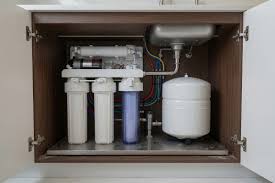
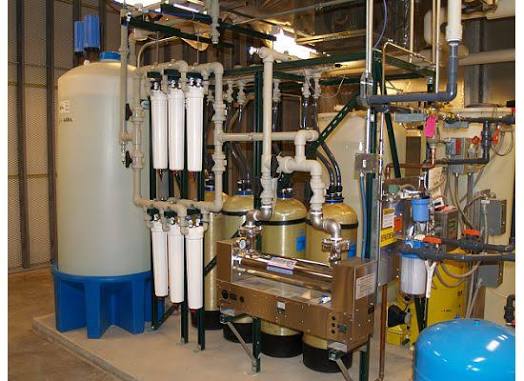
Proper commercial equipment water treatment helps address water-related challenges before they turn into expensive maintenance problems. Depending on the application, treatment may involve softening, sediment removal, membrane filtration, or other specialised processes.
Think about a busy restaurant with an espresso machine that needs constant descaling. The time spent cleaning it, arranging repairs, and dealing with inconsistent performance could potentially be reduced by addressing the incoming water supply.
Sometimes, the problem isn’t the machine itself. It’s what keeps flowing through it.
Different Businesses Have Different Water Requirements
A commercial laundry, a pharmaceutical laboratory, and a food processing facility all rely on water, but their requirements couldn’t be more different.
Hotels may prioritise reducing mineral deposits and improving laundry results. Manufacturing facilities might require water with specific chemical characteristics to maintain production consistency.
Choosing suitable water treatment systems for businesses begins with understanding these individual requirements. Factors such as daily consumption, peak operating demand, incoming water composition, and desired output quality influence system selection.
A smaller business might benefit from straightforward filtration and softening, whereas a larger industrial facility could require multiple treatment stages.
There’s little point in purchasing sophisticated equipment simply because it offers impressive technical specifications. What matters is whether it solves the problems your business actually faces.
Understanding the Role of Deionized Water
Some commercial and industrial applications require water with exceptionally low concentrations of dissolved ions. Ordinary filtration and softening may not be sufficient for these more demanding processes.
This is where commercial water deionization becomes particularly useful. Deionization typically uses specialised ion exchange resins to remove positively and negatively charged dissolved ions from water.
Industries involved in electronics manufacturing, laboratory testing, precision cleaning, and certain pharmaceutical processes often use deionized water to meet specific operational requirements.
One practical advantage is that reducing dissolved minerals can help prevent unwanted residue from forming on sensitive surfaces.
However, deionization doesn’t necessarily remove microorganisms or every type of organic contaminant. Additional treatment may be necessary depending on the intended application.
Understanding these limitations is just as important as recognising the technology’s benefits.
How Better Water Management Can Reduce Business Expenses
Equipment repairs are expensive enough without the added frustration of operational downtime. Even a relatively short interruption can create scheduling problems, delayed orders, and dissatisfied customers.
Appropriate water treatment may help reduce excessive mineral accumulation, protect sensitive components, and minimise certain maintenance requirements.
Energy consumption deserves consideration, too. Heating equipment affected by significant scale deposits may require additional energy to achieve the desired operating temperature.
Then there are expenses that don’t immediately stand out, such as extra cleaning chemicals, premature component replacements, and employee hours spent troubleshooting recurring problems.
Although installing treatment equipment involves an upfront investment, the potential long-term benefits can make it worthwhile. The key is evaluating realistic savings against installation, servicing, and operating costs.
Water Testing Should Guide Every Investment
Buying treatment equipment without testing the water first is a bit like replacing car parts without knowing what’s causing the engine trouble. You might solve the problem, but there’s a reasonable chance you’re wasting money.
A comprehensive water assessment can provide useful information about hardness, dissolved solids, pH, and other relevant characteristics.
Businesses with specialised production requirements may also need more detailed laboratory analysis.
These results help determine which treatment methods are appropriate and whether additional pretreatment is necessary. They also establish a useful reference point for evaluating equipment performance after installation.
A little preparation at this stage can prevent considerably more complicated problems later.
Don’t Underestimate the Importance of Routine Maintenance
Commercial water treatment equipment is built to handle demanding conditions, but it still needs regular attention.
Filters become clogged, ion exchange resins lose capacity, and membranes may require periodic cleaning or replacement.
Monitoring water quality, operating pressure, and flow rates helps identify performance changes before they become disruptive.
It’s also sensible to maintain accurate service records and assign clear responsibilities to employees overseeing the equipment.
Nobody wants to discover that an overdue maintenance task has caused an avoidable production delay. Scheduling routine servicing around quieter operating periods can make the process much more manageable.
A Practical Investment in Long-Term Business Reliability
Water treatment might not be the most exciting subject at a business planning meeting, but its value becomes apparent when equipment operates reliably and unexpected maintenance problems become less frequent.
Understanding your water supply, selecting appropriate technology, and maintaining equipment consistently can support smoother operations and more predictable expenses.
Ultimately, better water management is about protecting the resources your business already depends on. And sometimes, the smartest improvements are the ones customers never see but everyone benefits from.